



The Art of Knit · 5 min read
Wool for Spring.
Yes, Really.
The case for keeping your knitwear out long after the central heating goes off.
Somewhere around March, a well-meaning instinct takes hold: pack away the wool, bring out the linen. It feels logical. It is, mostly, wrong.
Merino wool is not a winter fabric that tolerates being worn in autumn. It is a temperature-regulating fibre that happens to be at its most useful precisely when the weather can't make up its mind — which is to say, spring in some places, almost indefinitely.
Why merino works
when the temperature doesn't
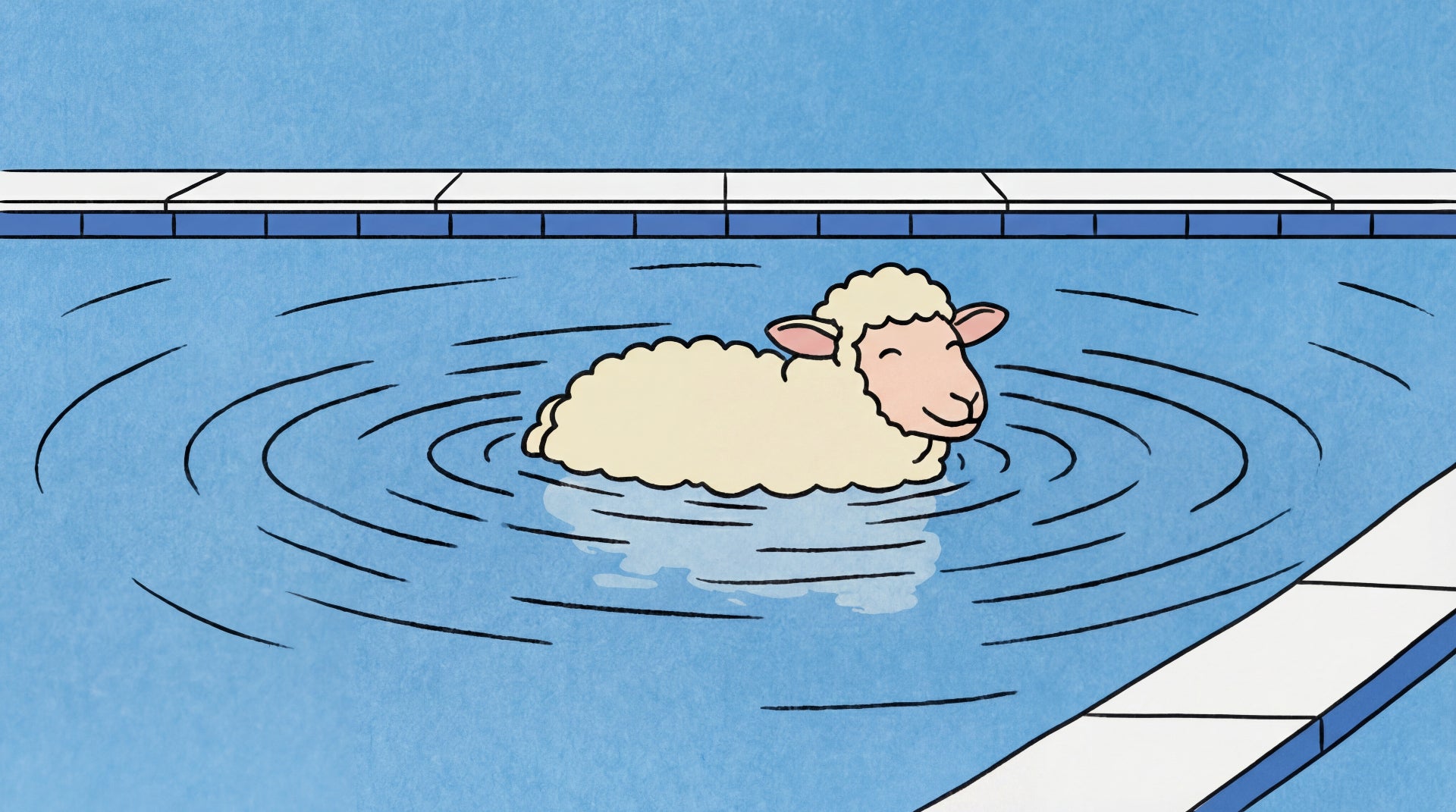
Wool fibres are hygroscopic, meaning they actively absorb and release moisture in response to the environment around them. When you're warm, the fibre absorbs that moisture — up to 35% of its own weight — pulling it away from the skin before releasing it gradually into the air. The result is a fabric that buffers rather than reacts. You don't overheat sharply; you stay regulated.
This is why merino has long been the fibre of choice for endurance athletes and military use. It performs in variable conditions precisely because variable conditions are where most fibres fail.
Interactive
The moisture buffer
Drag to simulate moisture absorption →
Dry fibre
Wool at rest — scales lie flat, air trapped between fibres for insulation.
Fine merino — typically 19.5 microns or below — achieves this without the weight or bulk of traditional wool. A lightweight merino piece in spring does what a heavy knit does in winter, just in a thinner, more breathable construction.
Spring, with its 8 degree mornings and 18 degree afternoons, is exactly the environment merino was built for.
How to actually
layer it
The mistake with spring layering is treating it like winter layering with fewer pieces. It isn't. The logic is different. In winter you're building insulation. In spring you're building modularity — the ability to adjust without carrying the evidence of having adjusted.
A spring day
Temperature through the day
Tap or hover each bar for layering guidance
Interactive
The spring layer stack
Fine merino tee
150gsmTemperature regulation at the skin. Moisture wicking starts here.
Lightweight knit crew
220gsmThe workhorse. Adds warmth without bulk. First to come off at noon.
Merino Over Shirt
320gsmBreathes where a jacket doesn't. Packs flat. The spring outer layer.
Full stack. You'll shed the outer by 10am.
Start fine, add weight
A lightweight merino base — a fine knit crew or an everyday tee — gives you temperature regulation at the skin level. Over that, a mid-layer: an open-weave or looser-gauge knit that adds warmth without sealing it in. This is the layer you lose first when the afternoon arrives. The base layer stays.
Treat the cardigan as outerwear
A substantial merino cardigan or Over Shirt worn over a shirt or fine knit performs like a light jacket in spring temperatures. It breathes where a coat doesn't, packs flat, and doesn't require the architectural commitment of a full outer layer. For a 12 degree day with sun, it is almost always the right answer.
Let texture do the work colour usually does
Spring dressing often defaults to lighter palettes, but with knitwear the more interesting move is textural contrast. A smooth fine-gauge knit under an open, almost mesh-like layer over a cotton shirt creates visual depth without requiring you to introduce colour you don't want. Tonal layering in this way reads as considered rather than matchy.
Proportion matters more than season
An oversized knit that reads as cosy in December reads as relaxed in April if you adjust what's beneath it. Slim underneath, loose on top. The silhouette shifts the seasonal reading more than the temperature outside does.
The one thing
to avoid
Wearing your heaviest winter knit and hoping for the best. Spring calls for weight adjustment, not fibre adjustment. The same merino wardrobe that carried you through winter will carry you through spring; it just needs to be deployed differently. Lighter pieces forward, heavier pieces held back for the evenings that still catch you off guard.
Wool doesn't have an off-season. It just asks to be worn with a little more thought.