


The Art of Knit · 12 min read
The Hands
That Made It
What we lost when we stopped caring about craft — and why it matters more than you think.
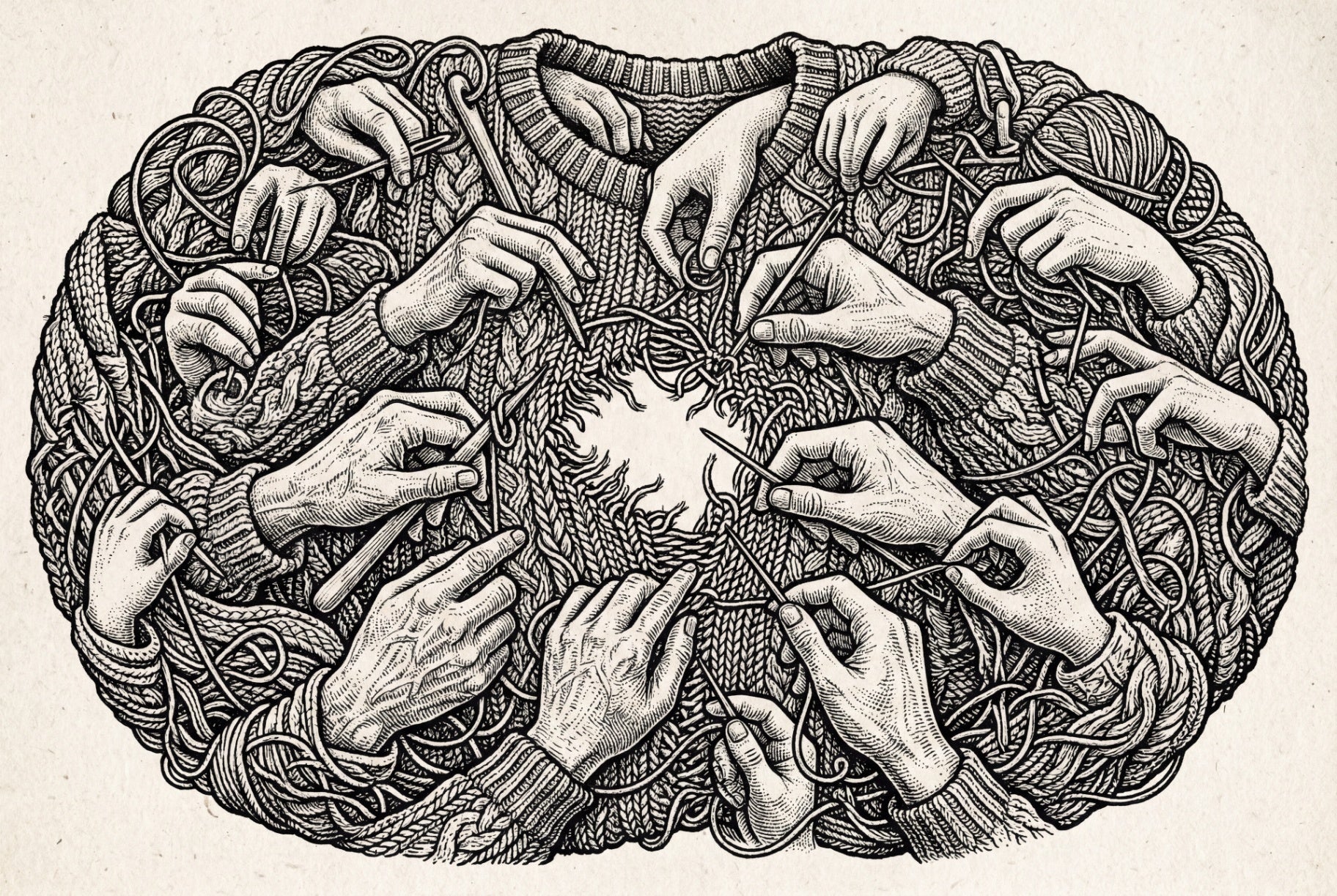
There is a particular kind of knowledge that lives in the hands. Not in books, not in manuals, not in YouTube tutorials — though all of those exist now in abundance. In the hands. In the muscle memory of someone who has spent years learning how tension works, how yarn behaves under different conditions, how a single dropped stitch can travel silently down a garment like a secret.
For most of human history, this knowledge was ordinary. Unremarkable. People made and mended their own clothes the way they cooked their own food — not as a hobby, not as an identity, but as a basic fact of being alive. The ability to knit, to sew, to repair, was not a skill you listed on a CV. It was just something you knew.
We don't know it anymore.
The quiet erosion
In the UK alone, it's estimated that fewer than half of the population can perform a basic clothing repair. A missing button, a split seam, a small tear. Things that would once have been fixed before breakfast now send garments to landfill, or at best, to the charity shop. The knowledge didn't disappear overnight. It eroded quietly, across generations, as making things by hand became first optional, then unfashionable, then simply unnecessary in a world where replacement was always cheaper than repair.
What replaced it wasn't nothing. It was speed. Volume. The extraordinary logistical achievement of fast fashion. The ability to move a design from sketch to shop floor in two weeks, at a price point that made repair feel faintly absurd. Why darn a sock when a pack of five costs less than the wool to fix it?
<50%
of UK adults can do a basic clothing repair
2 weeks
sketch to shop floor in fast fashion
300K
tonnes of clothing sent to UK landfill yearly
The economics make sense. The loss, though, is larger than the economics.
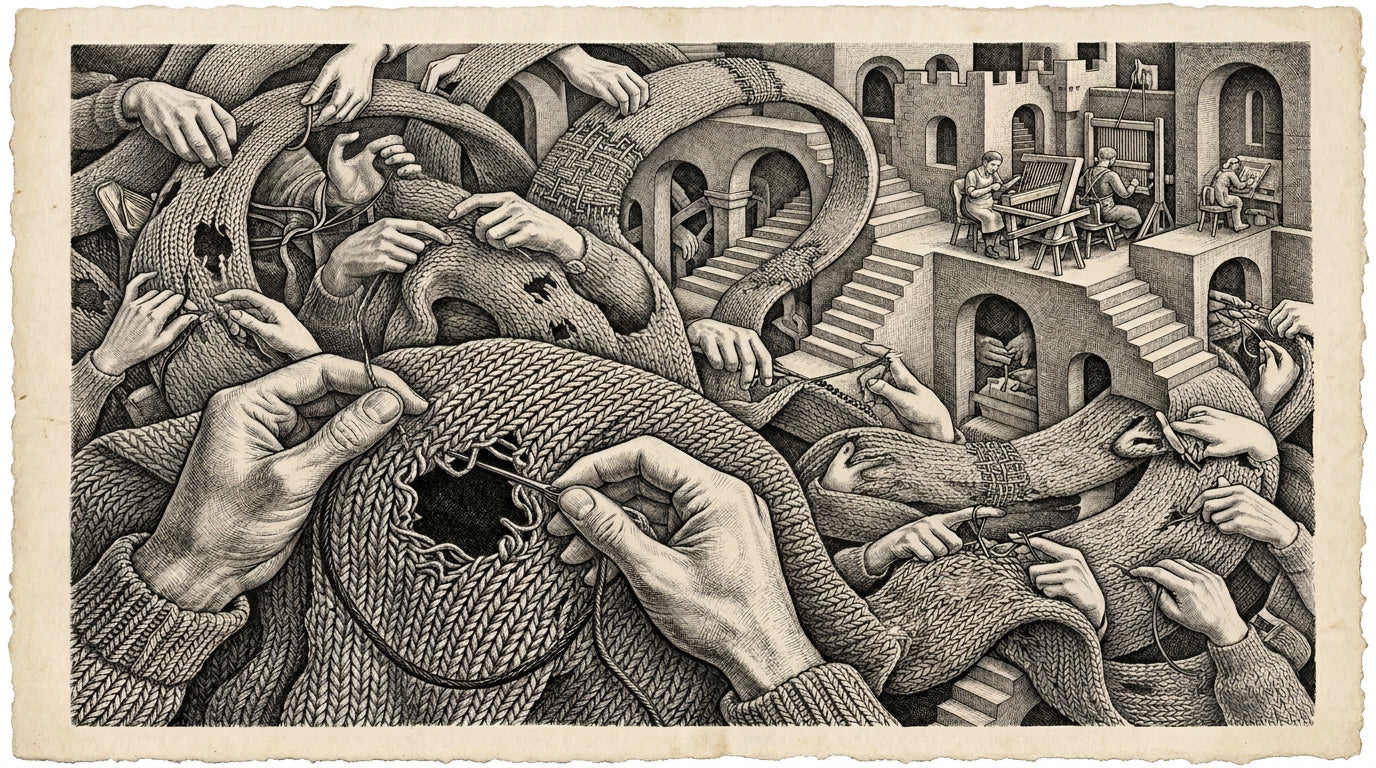
Repair is not nostalgia. It is literacy.
Craft literacy
Craft knowledge is not merely practical. It is a way of understanding how things are made — and therefore, what they're worth. When you know how a garment comes together, you read it differently. You notice the difference between a seam that's been cut and sewn from a flat piece of fabric and one that's been shaped, stitch by stitch, to follow the contour of a body. You understand why one sweater loses its shape within a month and another improves with age. You develop, in other words, a kind of literacy. An ability to see through the surface of an object to the decisions and labour inside it.
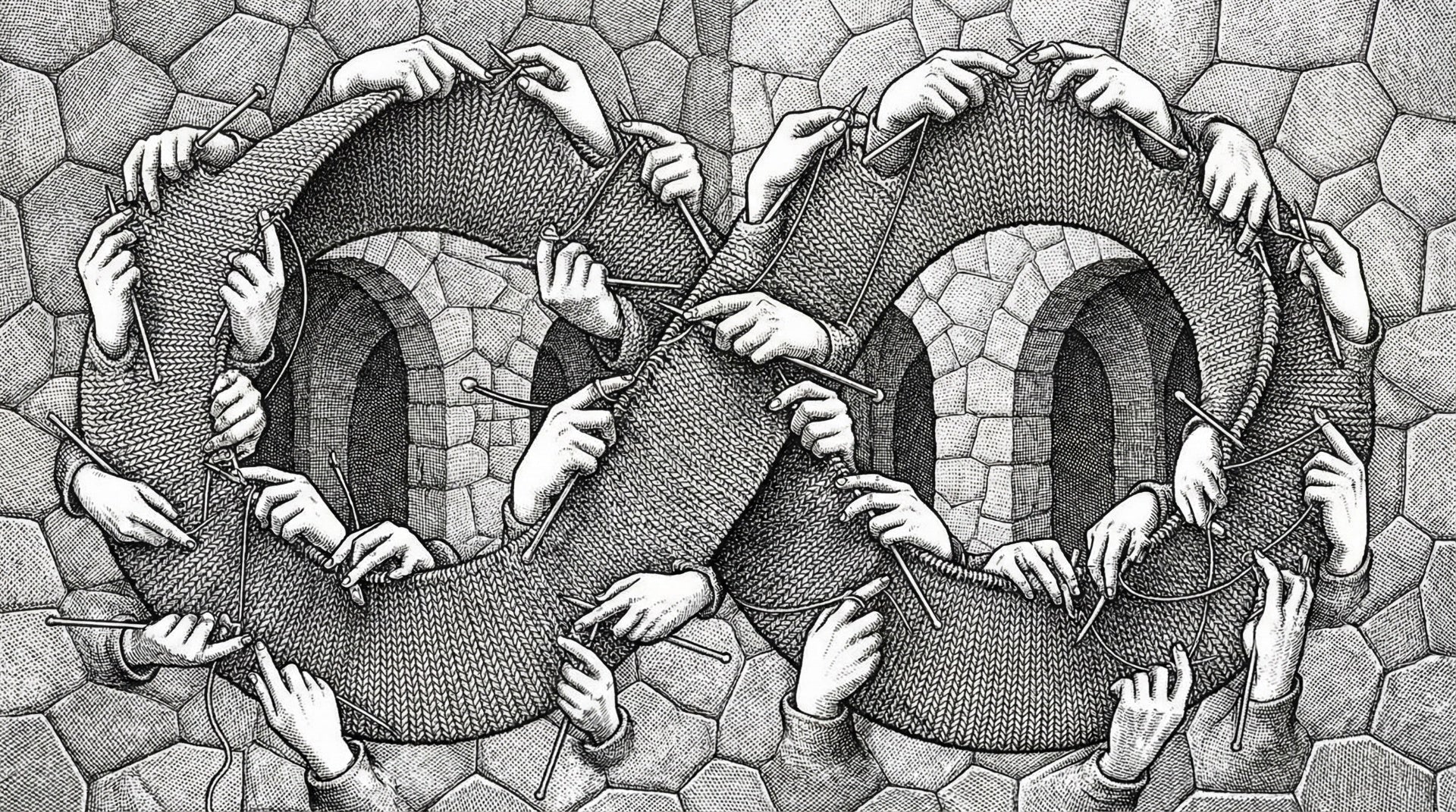
Fully fashioned
This is what fully fashioned knitwear is, at its core: evidence of those decisions. Rather than cutting panels from a flat knitted fabric and stitching them together — the cheaper, faster method that often dominates mass production — fully fashioned pieces are shaped on the machine as they're made. Each panel is knitted to its final form. The stitches at the edges are linked, not overlocked. The result is a garment with less bulk at the seams, better drape, longer life. It is also a garment that takes more time, more skill, and more care to produce.
A quiet renaissance
There are signs, quietly encouraging ones, that this is beginning to change. The pandemic sent unusual numbers of people back to making things with their hands. Sourdough, obviously, but also knitting, which experienced something close to a cultural renaissance. Also visible mending — the practice of repairing garments in ways that celebrate rather than conceal the repair — moved from craft blogs to mainstream conversation. It's part of why we built the Knit Clinic, a dedicated repair service in partnership with The Seam, connecting Sheep Inc. garments with specialist makers who understand knitwear construction at a fibre level. Not a return process. Not a goodwill gesture. A considered belief that our responsibility to a garment doesn't end at the point of sale. It's simply where the relationship begins.
These are not mass movements. They are not going to reverse the structural economics of the garment industry. But they represent something real: a growing appetite for a different relationship with the things we own. A preference, even if it's inconvenient, for understanding over convenience.
The maker economy, with its Substacks, its small-batch studios, its waiting lists for hand-knitted pieces that cost what they actually cost to make, exists because that appetite is real. People are willing to pay for craft when they understand what craft means. The problem, historically, has been the gap between the two: between what makers know and what consumers have been given the language to see.
Not nostalgia
None of this is romantic nostalgia for a simpler time that wasn't, in fact, simpler. Making your own clothes out of necessity is not the same as choosing to make them now. The knowledge that lived in our grandmothers' hands existed alongside a great deal of other things.
But there is a version of that knowledge worth recovering. Not the obligation, but the understanding. The ability to hold a garment and know whether it's been made with care or made to be discarded. The literacy to ask better questions, make better choices, keep things longer.
At Sheep Inc, this is not a peripheral concern. It sits at the centre of what we think knitwear should be: things made carefully enough, and honestly enough, to be worth understanding. The repair infrastructure, the education, the full transparency into how each piece comes together. We think craft knowledge — the kind that lives in hands, and can be passed on — is worth protecting.
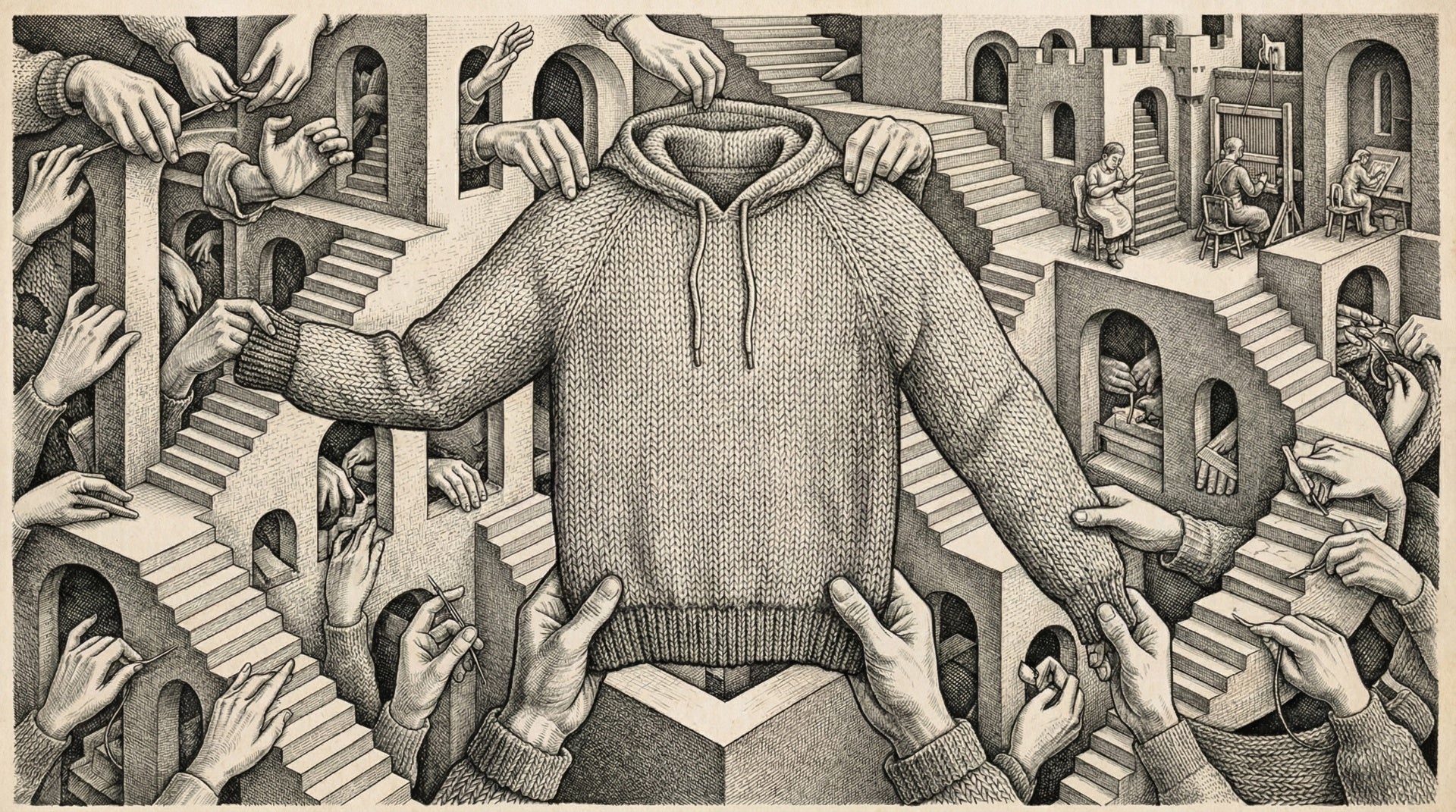
Craft knowledge is worth protecting.
The kind that lives in hands, and can be passed on.
Sheep Inc. Field Notes · 2026